Speranza
In arguing against a supposed ambiguity, philosophers often rely on the zeugma test. In an application of the zeugma test, a supposedly ambiguous expression is placed in a sentence in which several of its supposed meanings are forced together. If the resulting sentence sounds zeugmatic, that is taken as evidence for ambiguity; if it does not sound zeugmatic, that is taken as evidence against ambiguity. The aim of this article is to show that arguments based on the second direction of the test are misguided: ambiguous expressions, and in particular philosophically contested ones, do not reliably lead to zeugmaticity, so an absence of zeugmaticity provides no meaningful evidence for an absence of ambiguity.
Wednesday, July 11, 2018

Grice on quantification
Speranza
Quantifier variance faces a number of difficulties. In this paper we first formulate the view as holding that the meanings of the quantifiers may vary, and that languages using different quantifiers may be charitably translated into each other. We then object to the view on the basis of four claims: (i) quantifiers cannot vary their meaning extensionally by changing the domain of quantification; (ii) quantifiers cannot vary their meaning intensionally without collapsing into logical pluralism; (iii) quantifier variance is not an ontological doctrine; (iv) quantifier variance is not compatible with charitable translation and as such is internally inconsistent. In light of these troubles, we recommend the dissolution of quantifier variance and suggest that the view be laid to rest.
Quantifier variance faces a number of difficulties. In this paper we first formulate the view as holding that the meanings of the quantifiers may vary, and that languages using different quantifiers may be charitably translated into each other. We then object to the view on the basis of four claims: (i) quantifiers cannot vary their meaning extensionally by changing the domain of quantification; (ii) quantifiers cannot vary their meaning intensionally without collapsing into logical pluralism; (iii) quantifier variance is not an ontological doctrine; (iv) quantifier variance is not compatible with charitable translation and as such is internally inconsistent. In light of these troubles, we recommend the dissolution of quantifier variance and suggest that the view be laid to rest.
Grice’s First Person
Speranza
It is often assumed that singular thought requires that an agent be epistemically acquainted with the object the thought is about. However, it can sometimes truthfully be said of someone that they have a belief about an object, despite not being interestingly epistemically acquainted with that object. In defense of an epistemic acquaintance constraint on singular thought, it is thus often claimed that belief ascriptions are context-sensitive, and do not always track the contents of an agent’s mental states. This paper uses first-person attitude reports to argue that contextualism about belief ascriptions does not present an adequate defense of an acquaintance constraint on singular thought.
It is often assumed that singular thought requires that an agent be epistemically acquainted with the object the thought is about. However, it can sometimes truthfully be said of someone that they have a belief about an object, despite not being interestingly epistemically acquainted with that object. In defense of an epistemic acquaintance constraint on singular thought, it is thus often claimed that belief ascriptions are context-sensitive, and do not always track the contents of an agent’s mental states. This paper uses first-person attitude reports to argue that contextualism about belief ascriptions does not present an adequate defense of an acquaintance constraint on singular thought.
Grisotto all’italiana
Speranza
Epistemic modal verbs and adverbs of necessity are claimed to be positive polarity items. We study their behavior by examining modal spread, a phenomenon that appears redundant or even anomalous, since it involves two apparent modal operators being interpreted as a single modality. We propose an analysis in which the modal adverb is an argument of the MUST modal, providing a meta-evaluation \ which ranks the Ideal, stereotypical worlds in the modal base as better possibilities than the Non-Ideal worlds in it. MUST and possibility modals differ in that the latter have an empty \, a default that can be negotiated. Languages vary in the malleability of this parameter. Positive polarity is derived as a conflict between the ranking imposed by \—which requires that the Ideal worlds be better possibilities than Non-Ideal worlds—and the effect of higher negation which renders the Ideal set non-homogenous. Applying the ordering over such a non-homogeneous set would express preference towards both p and \ worlds thus rendering the sentence uninformative. Negative polarity MUST and possibility modals, on the other hand, contain an empty \, application of higher negation therefore poses no problem. This account is the first to connect modal spread to positive polarity of necessity modals, and captures the properties of both in a unified analysis.
Epistemic modal verbs and adverbs of necessity are claimed to be positive polarity items. We study their behavior by examining modal spread, a phenomenon that appears redundant or even anomalous, since it involves two apparent modal operators being interpreted as a single modality. We propose an analysis in which the modal adverb is an argument of the MUST modal, providing a meta-evaluation \ which ranks the Ideal, stereotypical worlds in the modal base as better possibilities than the Non-Ideal worlds in it. MUST and possibility modals differ in that the latter have an empty \, a default that can be negotiated. Languages vary in the malleability of this parameter. Positive polarity is derived as a conflict between the ranking imposed by \—which requires that the Ideal worlds be better possibilities than Non-Ideal worlds—and the effect of higher negation which renders the Ideal set non-homogenous. Applying the ordering over such a non-homogeneous set would express preference towards both p and \ worlds thus rendering the sentence uninformative. Negative polarity MUST and possibility modals, on the other hand, contain an empty \, application of higher negation therefore poses no problem. This account is the first to connect modal spread to positive polarity of necessity modals, and captures the properties of both in a unified analysis.
Grice on ‘if’-beliefs
Speranza
- This doctoral dissertation investigates what influence indicative conditionals have on belief updating and how learning from conditionals may be modelled in a probabilistic framework. Because the problem is related to the interpretation of conditionals, we first assess different semantics of indicative conditionals. We propose that conditionals should be taken as primary concepts. This allows us to defend a claim that learning a conditional is equivalent to learning that the relevant conditional probability is 1. This implies that learning a conditional can be modelled as learning a material conditional. We then turn to a few competing approaches to the problem of learning from a conditional -- an approach that models these situations with regards to changes in the explanatory status of the antecedent, as minimising probability distances between the prior and posterior probability distributions, and, particularly, an approach based on epistemic entrenchment. It is argued that although all approaches are important for their pioneering contributions, none of them ultimately provides a fully satisfactory solution. We then formulate a proposal according to which learning a conditional may be modelled as learning a material conditional in conjunction with other contextually inferred or observed information. We show that the view has an intuitive appeal on the grounds of pragmatics and empirical research in psychology of reasoning. We also show that the proposed approach successfully resolves all standard cases from the literature. The proposal is then extended to left-nested conditionals. To do so, we first inspect some preliminary empirical data about actual reasoning with nested conditionals and then show that the proposed approach also successfully models these cases. We then investigate how the approach may be extended to the so-called imperative conditionals. We introduce a tripartite typology of imperative conditionals and argue that although imperatives cannot be probabilistically modelled in any straight-forward way, at least some general insights of the proposed method help us understand the influence that the three different types of imperative conditionals have on listeners’ beliefs. We conclude with a summary and some open questions that should be addressed in future work (e.g. the influence of counterfactuals on belief updating).
Shakespeare and a Grice on indicative conditionals
Speranza
Characters in Richard II utter a number of neglected, yet philosophically interesting imperative conditionals. Based on a close reading of these examples, I provide a tripartite typology of imperative conditionals. The type 1 constitute the class of standard imperative conditionals; the type 2 implicate that the antecedent is false; and the type 3 implicate that the command in the consequent is to be complied with. I show how the type 2 and type 3 conditionals can be identified, and explain when and why the speakers utter them.
Characters in Richard II utter a number of neglected, yet philosophically interesting imperative conditionals. Based on a close reading of these examples, I provide a tripartite typology of imperative conditionals. The type 1 constitute the class of standard imperative conditionals; the type 2 implicate that the antecedent is false; and the type 3 implicate that the command in the consequent is to be complied with. I show how the type 2 and type 3 conditionals can be identified, and explain when and why the speakers utter them.
Grice on izzing
Speranza
The problem of existence is reputed to be one of the oldest and most intractable of philosophy: What do we mean when we say that something exists or, even more challengingly, that something does not exist? Intuitively, it seems that we all have a firm grip upon what we are saying. But how should we explain the difference–if there is any–between statements about existence and other, garden-variety predicative statements? What is the difference between saying that something exists and saying, for instance, that something is red, heavy, soft, etc.? These questions provide the focus of the present study. In the first part, this study addresses those authors that have been most effective and influential at widening the gap between statements about existence and garden-variety predicative statements. These are David Hume, Immanuel Kant, Franz Brentano, and Gottlob Frege. According to this family of approaches, existence becomes something very different from a property of objects. In the second part, this study turns to more recent attempts that have moved in the opposite direction by trying to reduce existence to a–more or less–plain property of objects. The philosophers that are going to be discussed here are Alexius Meinong, Richard Routley, Terence Parsons, William Rapaport, Edward Zalta, and Graham Priest. Between the first and the second part, an extensive chapter is dedicated to the approaches to existence developed under the heading of free logics. Finally, the third part of this study develops a deflationist account of existence: We should abandon the assumption shared by all accounts discussed in this study, namely that the notion of existence adds something to the content of a statement. To the contrary, we should think of existence as a redundant notion. The advantage of this strategy is that it does not make it contradictory to say that something does not exist – a frequent upshot of the approaches discussed in the first part. At the same time, this strategy avoids the epicycles common to the approaches discussed in the second part, which are strictly linked to the reduction of existence to a property of objects
The problem of existence is reputed to be one of the oldest and most intractable of philosophy: What do we mean when we say that something exists or, even more challengingly, that something does not exist? Intuitively, it seems that we all have a firm grip upon what we are saying. But how should we explain the difference–if there is any–between statements about existence and other, garden-variety predicative statements? What is the difference between saying that something exists and saying, for instance, that something is red, heavy, soft, etc.? These questions provide the focus of the present study. In the first part, this study addresses those authors that have been most effective and influential at widening the gap between statements about existence and garden-variety predicative statements. These are David Hume, Immanuel Kant, Franz Brentano, and Gottlob Frege. According to this family of approaches, existence becomes something very different from a property of objects. In the second part, this study turns to more recent attempts that have moved in the opposite direction by trying to reduce existence to a–more or less–plain property of objects. The philosophers that are going to be discussed here are Alexius Meinong, Richard Routley, Terence Parsons, William Rapaport, Edward Zalta, and Graham Priest. Between the first and the second part, an extensive chapter is dedicated to the approaches to existence developed under the heading of free logics. Finally, the third part of this study develops a deflationist account of existence: We should abandon the assumption shared by all accounts discussed in this study, namely that the notion of existence adds something to the content of a statement. To the contrary, we should think of existence as a redundant notion. The advantage of this strategy is that it does not make it contradictory to say that something does not exist – a frequent upshot of the approaches discussed in the first part. At the same time, this strategy avoids the epicycles common to the approaches discussed in the second part, which are strictly linked to the reduction of existence to a property of objects
Conversations with Grice
Speranza
In this broad interview Robert Brandom talks about many themes concerning his work and about his career and education. Brandom reconstructs the main debts that he owes to colleagues and teachers, especially Wilfrid Sellars, Richard Rorty, and David Lewis, and talks about the projects he’s currently working on. He also talks about contemporary and classical pragmatism, and of the importance of classical thinkers like Kant and Hegel for contemporary debates. Other themes go deeper into the principal topics of his theoretical work – in particular, his later understanding of expressivism, his take on the debate between representationalists and anti-representationalists in semantics, the main open problems for his wide inferentialist project, and his methodological preference for the normative vocabulary in his account of discursive practice. Finally, Brandom touches on the epistemic role of perception and on his views about the importance of the phenomenological aspects of perceptual experience.
In this broad interview Robert Brandom talks about many themes concerning his work and about his career and education. Brandom reconstructs the main debts that he owes to colleagues and teachers, especially Wilfrid Sellars, Richard Rorty, and David Lewis, and talks about the projects he’s currently working on. He also talks about contemporary and classical pragmatism, and of the importance of classical thinkers like Kant and Hegel for contemporary debates. Other themes go deeper into the principal topics of his theoretical work – in particular, his later understanding of expressivism, his take on the debate between representationalists and anti-representationalists in semantics, the main open problems for his wide inferentialist project, and his methodological preference for the normative vocabulary in his account of discursive practice. Finally, Brandom touches on the epistemic role of perception and on his views about the importance of the phenomenological aspects of perceptual experience.
Wednesday, July 4, 2018
Ecumenical Grice
Speranza
Ecumenical Alethic Pluralism (EAP) is a novel kind of alethic pluralism. It is ecumenical in that it widens the scope of alethic pluralism by allowing for a normatively deflated truth property alongside a variety of normatively robust truth properties. We establish EAP by showing how Wright's Inflationary Arguments fail in the domain of taste, once a relativist treatment of the metaphysics and epistemology of that domain is endorsed. EAP is highly significant to current debates on the nature of truth insofar as it involves a reconfiguration of the dialectic between deflationists and pluralists.
You’re the cream in my coffee: a meta-ethical implicature
Speranza
Increasingly, metaphors are the target of political critique: Jewish groups condemn Holocaust imagery; mental health organizations, the metaphorical exploitation of psychosis; and feminists, “rape metaphors.” I develop a novel model for making sense of such critiques of metaphor.
Increasingly, metaphors are the target of political critique: Jewish groups condemn Holocaust imagery; mental health organizations, the metaphorical exploitation of psychosis; and feminists, “rape metaphors.” I develop a novel model for making sense of such critiques of metaphor.
Shakespeare’s Implicature
Speranza
Characters in Richard II utter a number of neglected, yet philosophically interesting imperative conditionals. Based on a close reading of these examples, I provide a tripartite typology of imperative conditionals. The type 1 constitute the class of standard imperative conditionals; the type 2 implicate that the antecedent is false; and the type 3 implicate that the command in the consequent is to be complied with. I show how the type 2 and type 3 conditionals can be identified, and explain when and why the speakers utter them.
Characters in Richard II utter a number of neglected, yet philosophically interesting imperative conditionals. Based on a close reading of these examples, I provide a tripartite typology of imperative conditionals. The type 1 constitute the class of standard imperative conditionals; the type 2 implicate that the antecedent is false; and the type 3 implicate that the command in the consequent is to be complied with. I show how the type 2 and type 3 conditionals can be identified, and explain when and why the speakers utter them.
Grice on modals
Speranza
Possible worlds semantics faces a range of difficulties for at least certain types of modals, especially deontic modals with their distinction between heavy and light permissions and obligations. This paper outlines a new semantics of modals that aims to overcome some of those difficulties. The semantics is based on an a novel ontology of modal objects, entities like obligations, permissions, needs, as well as epistemic states, abilities, and essences. Moreover, it is based on truthmaking, in the sense of Fine’s recent truthmaker semantics.
Possible worlds semantics faces a range of difficulties for at least certain types of modals, especially deontic modals with their distinction between heavy and light permissions and obligations. This paper outlines a new semantics of modals that aims to overcome some of those difficulties. The semantics is based on an a novel ontology of modal objects, entities like obligations, permissions, needs, as well as epistemic states, abilities, and essences. Moreover, it is based on truthmaking, in the sense of Fine’s recent truthmaker semantics.
“Grice’s Portrait,” oil on canvas
Speranza
Art historians and philosophers often talk about the interpretive significance of titles, but few have bothered with their historical origins. This omission has led to the assumption that an artwork's title is its proper name, since names and titles share the essential function of facilitating reference to their bearers. But a closer look at the development of our titling practices shows a significant point of divergence from standard analyses of proper names: the semantic content of a title is often crucial to the identification, individuation, and interpretation of its associated artwork. This paper represents a first step towards an empirically centred study of our titling practices. I argue that, in order to accept titles as proper names, we must first recognize the social, rather than the referential, function of naming.
Art historians and philosophers often talk about the interpretive significance of titles, but few have bothered with their historical origins. This omission has led to the assumption that an artwork's title is its proper name, since names and titles share the essential function of facilitating reference to their bearers. But a closer look at the development of our titling practices shows a significant point of divergence from standard analyses of proper names: the semantic content of a title is often crucial to the identification, individuation, and interpretation of its associated artwork. This paper represents a first step towards an empirically centred study of our titling practices. I argue that, in order to accept titles as proper names, we must first recognize the social, rather than the referential, function of naming.
Grice on propositional complexes
Speranza
The object of this paper is to sketch an approach to propositions, meaning and names. The key ingredients are a Twin-Earth-inspired distinction between internal and external meaning, and a middle-Wittgenstein-inspired conception of internal meaning as role in language system. The focus here is not on working out all the details, but on outlining the approach and showing how it offers a promising solution to the problem of the meaning of proper names. This is a plea for a neglected way of thinking about these topics.
The object of this paper is to sketch an approach to propositions, meaning and names. The key ingredients are a Twin-Earth-inspired distinction between internal and external meaning, and a middle-Wittgenstein-inspired conception of internal meaning as role in language system. The focus here is not on working out all the details, but on outlining the approach and showing how it offers a promising solution to the problem of the meaning of proper names. This is a plea for a neglected way of thinking about these topics.
Grice on private conversations
Speranza
William James was one of the most frequently cited authors in Wittgenstein’s Philosophical Investigations, but the attention paid to James’s Principles of Psycho- logy in that work is typically explained in terms of James having ‘committed in a clear, exemplary manner, fundamental errors in the philosophy of mind.’ (Goodman 2002, p. viii.) The most notable of these ‘errors’ was James’s purported commitment to a conception of language as ‘private’. Commentators standardly treat James as committed to a conception of language as private, and the most notorious instance of this commitment can purportedly be found in his discussion of the feelings associated with logical terms like ‘and’, ‘if ’ and ‘but’ in the Principles’s chapter, ‘The Stream of Thought’. However, the received view stands in need of serious re-evaluation. In particular, there is little reason to think that James’s notorious discussion of the ‘if-feeling’ should be understood as an attempt to give an account of the meaning of ‘if ’ (indeed, there is little reason to even think that Wittgenstein interpreted him this way). The picture of our ideas developed in ‘The Stream of Thought’ sits badly with any theory that identifies meanings with ideas in this way, and while James’s chapter on ‘Conception’ (as well as some portions of Some Problems of Philosophy) has also been portrayed as committing James to the in principle privacy of language, it will be argued here that James’s account of our ‘conceptions’ is radically different from that of the private linguist.
William James was one of the most frequently cited authors in Wittgenstein’s Philosophical Investigations, but the attention paid to James’s Principles of Psycho- logy in that work is typically explained in terms of James having ‘committed in a clear, exemplary manner, fundamental errors in the philosophy of mind.’ (Goodman 2002, p. viii.) The most notable of these ‘errors’ was James’s purported commitment to a conception of language as ‘private’. Commentators standardly treat James as committed to a conception of language as private, and the most notorious instance of this commitment can purportedly be found in his discussion of the feelings associated with logical terms like ‘and’, ‘if ’ and ‘but’ in the Principles’s chapter, ‘The Stream of Thought’. However, the received view stands in need of serious re-evaluation. In particular, there is little reason to think that James’s notorious discussion of the ‘if-feeling’ should be understood as an attempt to give an account of the meaning of ‘if ’ (indeed, there is little reason to even think that Wittgenstein interpreted him this way). The picture of our ideas developed in ‘The Stream of Thought’ sits badly with any theory that identifies meanings with ideas in this way, and while James’s chapter on ‘Conception’ (as well as some portions of Some Problems of Philosophy) has also been portrayed as committing James to the in principle privacy of language, it will be argued here that James’s account of our ‘conceptions’ is radically different from that of the private linguist.
Grice’s Taste
Speranza
In Truth and Objectivity, Crispin Wright argues that because truth is a distinctively normative property, it cannot be as metaphysically insubstantive as deflationists claim.1 This argument has been taken, together with the scope problem,2 as one of the main motivations for alethic pluralism.3 We offer a reconstruction of Wright’s Inflationary Argument (henceforth IA) aimed at highlighting what are the steps required to establish its inflationary conclusion. We argue that if a certain metaphysical and epistemological view of a given subject matter is accepted, a local counterexample to IA can be constructed. We focus on the domain of basic taste and we develop two variants of a subjectivist and relativist metaphysics and epistemology that seems palatable in that domain. Although we undertake no commitment to this being the right metaphysical cum epistemological package for basic taste, we contend that if the metaphysics and the epistemology of basic taste are understood along these lines, they call for a truth property whose nature is not distinctively normative—contra what IA predicts. This result shows that the success of IA requires certain substantial metaphysical and epistemological principles and that, consequently, a proper assessment of IA cannot avoid taking a stance on the metaphysics and the epistemology of the domain where it is claimed to be successful. Although we conjecture that IA might succeed in other domains, in this paper we don’t take a stand on this issue. We conclude by briefly discussing the significance of this result for the debate on alethic pluralism.
In Truth and Objectivity, Crispin Wright argues that because truth is a distinctively normative property, it cannot be as metaphysically insubstantive as deflationists claim.1 This argument has been taken, together with the scope problem,2 as one of the main motivations for alethic pluralism.3 We offer a reconstruction of Wright’s Inflationary Argument (henceforth IA) aimed at highlighting what are the steps required to establish its inflationary conclusion. We argue that if a certain metaphysical and epistemological view of a given subject matter is accepted, a local counterexample to IA can be constructed. We focus on the domain of basic taste and we develop two variants of a subjectivist and relativist metaphysics and epistemology that seems palatable in that domain. Although we undertake no commitment to this being the right metaphysical cum epistemological package for basic taste, we contend that if the metaphysics and the epistemology of basic taste are understood along these lines, they call for a truth property whose nature is not distinctively normative—contra what IA predicts. This result shows that the success of IA requires certain substantial metaphysical and epistemological principles and that, consequently, a proper assessment of IA cannot avoid taking a stance on the metaphysics and the epistemology of the domain where it is claimed to be successful. Although we conjecture that IA might succeed in other domains, in this paper we don’t take a stand on this issue. We conclude by briefly discussing the significance of this result for the debate on alethic pluralism.
Grice’s Scarecrow
Speranza
The standard view of "believes" and other propositional attitude verbs is that such verbs express relations between agents and propositions. A sentence of the form “S believes that p” is true just in case S stands in the belief-relation to the proposition that p; this proposition is the referent of the complement clause "that p." On this view, we would expect the clausal complements of propositional attitude verbs to be freely intersubstitutable with their corresponding proposition descriptions—e.g., "the proposition that p"—as they are in the case of "believes." In many cases, however, intersubstitution of that-clauses and proposition descriptions fails to preserve truth value or even grammaticality. These substitution failures lead some philosophers to reject the standard view of propositional attitude reports. Others conclude that propositional attitude verbs are systematically ambiguous. I reject both these views. On my view, the that-clause complements of propositional attitude verbs denote propositions, but proposition descriptions do not.
The standard view of "believes" and other propositional attitude verbs is that such verbs express relations between agents and propositions. A sentence of the form “S believes that p” is true just in case S stands in the belief-relation to the proposition that p; this proposition is the referent of the complement clause "that p." On this view, we would expect the clausal complements of propositional attitude verbs to be freely intersubstitutable with their corresponding proposition descriptions—e.g., "the proposition that p"—as they are in the case of "believes." In many cases, however, intersubstitution of that-clauses and proposition descriptions fails to preserve truth value or even grammaticality. These substitution failures lead some philosophers to reject the standard view of propositional attitude reports. Others conclude that propositional attitude verbs are systematically ambiguous. I reject both these views. On my view, the that-clause complements of propositional attitude verbs denote propositions, but proposition descriptions do not.
Disimplicatures of counteridenticals
Speranza
A counteridentical is a counterfactual with an identity statement in the antecedent. While counteridenticals generally seem non-trivial, most semantic theories for counterfactuals, when combined with the necessity of identity and distinctness, attribute vacuous truth conditions to such counterfactuals. In light of this, one could try to save the orthodox theories either by appealing to pragmatics or by denying that the antecedents of alleged counteridenticals really contain identity claims. Or one could reject the orthodox theory of counterfactuals in favor of a hyperintensional semantics that accommodates non-trivial counterpossibles. In this paper, I argue that none of these approaches can account for all the peculiar features of counteridenticals. Instead, I propose a modified version of Lewis’s counterpart theory, which rejects the necessity of identity, and show that it can explain all the peculiar features of counteridenticals in a satisfactory way. I conclude by defending the plausibility of contingent identity from objections.
A counteridentical is a counterfactual with an identity statement in the antecedent. While counteridenticals generally seem non-trivial, most semantic theories for counterfactuals, when combined with the necessity of identity and distinctness, attribute vacuous truth conditions to such counterfactuals. In light of this, one could try to save the orthodox theories either by appealing to pragmatics or by denying that the antecedents of alleged counteridenticals really contain identity claims. Or one could reject the orthodox theory of counterfactuals in favor of a hyperintensional semantics that accommodates non-trivial counterpossibles. In this paper, I argue that none of these approaches can account for all the peculiar features of counteridenticals. Instead, I propose a modified version of Lewis’s counterpart theory, which rejects the necessity of identity, and show that it can explain all the peculiar features of counteridenticals in a satisfactory way. I conclude by defending the plausibility of contingent identity from objections.
Thursday, June 28, 2018
Tuesday, June 26, 2018
A Griceian schema
Speranza
Many of the terms of our language, such as “jar”, are open-textured in the sense that their applicability to novel objects is not entirely determined by their past usage. Many others, such as the verbs “use” and “have”, are schematic in the sense that they have only a very general meaning although on any particular occasion of use they denote some more particular relation. The phenomena of open texture and schematicity constitute a sharp challenge to referential semantics, which assumes that every non-logical term has a definite extension. A different, non-referential approach to formal semantics defines truth as relative to a context and defines contexts as built up from exclusively linguistic entities. For any given utterance of a sentence, there will be one of these contexts that pertains to it. In this framework, open texture and schematicity can be understood as consequences of the complex nature of the pertaining relation between contexts and utterances.
Many of the terms of our language, such as “jar”, are open-textured in the sense that their applicability to novel objects is not entirely determined by their past usage. Many others, such as the verbs “use” and “have”, are schematic in the sense that they have only a very general meaning although on any particular occasion of use they denote some more particular relation. The phenomena of open texture and schematicity constitute a sharp challenge to referential semantics, which assumes that every non-logical term has a definite extension. A different, non-referential approach to formal semantics defines truth as relative to a context and defines contexts as built up from exclusively linguistic entities. For any given utterance of a sentence, there will be one of these contexts that pertains to it. In this framework, open texture and schematicity can be understood as consequences of the complex nature of the pertaining relation between contexts and utterances.
Grice on imagery
Speranza
How can thinking be effective in enabling us to meet our goals? If we answer this in terms of representation relations between thoughts and the world, then we are challenged to explain what representation is, which no one has been able to do. If we drop the appeal to representation, then it is hard to explain why certain inferences are good and others are not. This paper outlines a strategy for a nonrepresentationalist account of the way in which the structure of reality may drive cognition. It begins by restricting our attention to certain paradigm cases of linguistically-mediated cooperative exchange. Second, it introduces a kind of nonconceptual thinking -- thinking in mental images. Third, in terms of imagistic cognition, the nonnormative conditions under which sentences are asserted and accepted is explained. Fourth, in terms of these conditions, the possibility of successful linguistic exchange in the paradigm cases is to be explained. Fifth, the strategy calls for an explanation how a language can be internalized and become a medium of intrapersonal thought. Finally, the norms of discourse can be conceived as norms that supervise the processes of linguistic exchange so explained. In this paper only the first three steps of the overall strategy will be carried out in any detail. But a strategy for completing the last three steps will be sketched.
How can thinking be effective in enabling us to meet our goals? If we answer this in terms of representation relations between thoughts and the world, then we are challenged to explain what representation is, which no one has been able to do. If we drop the appeal to representation, then it is hard to explain why certain inferences are good and others are not. This paper outlines a strategy for a nonrepresentationalist account of the way in which the structure of reality may drive cognition. It begins by restricting our attention to certain paradigm cases of linguistically-mediated cooperative exchange. Second, it introduces a kind of nonconceptual thinking -- thinking in mental images. Third, in terms of imagistic cognition, the nonnormative conditions under which sentences are asserted and accepted is explained. Fourth, in terms of these conditions, the possibility of successful linguistic exchange in the paradigm cases is to be explained. Fifth, the strategy calls for an explanation how a language can be internalized and become a medium of intrapersonal thought. Finally, the norms of discourse can be conceived as norms that supervise the processes of linguistic exchange so explained. In this paper only the first three steps of the overall strategy will be carried out in any detail. But a strategy for completing the last three steps will be sketched.
Grice on full and empty names
Speranza
The object of this paper is to sketch an approach to propositions, meaning and names. The key ingredients are a Twin-Earth-inspired distinction between internal and external meaning, and a middle-Wittgenstein-inspired conception of internal meaning as role in language system. The focus here is not on working out all the details, but on outlining the approach and showing how it offers a promising solution to the problem of the meaning of proper names. This is a plea for a neglected way of thinking about these topics.
The object of this paper is to sketch an approach to propositions, meaning and names. The key ingredients are a Twin-Earth-inspired distinction between internal and external meaning, and a middle-Wittgenstein-inspired conception of internal meaning as role in language system. The focus here is not on working out all the details, but on outlining the approach and showing how it offers a promising solution to the problem of the meaning of proper names. This is a plea for a neglected way of thinking about these topics.
Grice on the performative
Speranza
In this essay, I argue that Søren Kierkegaard’s oeuvre can be seen as a theater of ideas. This argument is developed in three steps. First, I will briefly introduce a theoretical framework for addressing the theatrical dimension of Kierkegaard’s works. This framework is based on a distinction between“performative writing strategies” and “categories of performativity.” As a second step, I will focus on Repetition: A Venture in Experimenting Psychology, by Constantin Constantius, one of the best examples of Kierkegaard’s innovative way of doing philosophy. This strange and elusive book introduces the difficult and counter-intuitive notion of repetition. Repetition is a category of performativity that aims to activate the subjectivity of the reader. This performative effect is achieved by confronting the reader with an “unresolved”existential problem that is not yet drawn into clarity but is staged in all its confusions and contradictions. Kierkegaard’s pseudonym Constantius relies here on a performative writing strategy that is animated by a dialectic of advance and withdrawal. In the last and third step, I will analyze Constantius’s own reflection on the performative dimension of his text. Constantius has left several clues behind, each of which suggests that he deliberately developed a performative writing strategy.
In this essay, I argue that Søren Kierkegaard’s oeuvre can be seen as a theater of ideas. This argument is developed in three steps. First, I will briefly introduce a theoretical framework for addressing the theatrical dimension of Kierkegaard’s works. This framework is based on a distinction between“performative writing strategies” and “categories of performativity.” As a second step, I will focus on Repetition: A Venture in Experimenting Psychology, by Constantin Constantius, one of the best examples of Kierkegaard’s innovative way of doing philosophy. This strange and elusive book introduces the difficult and counter-intuitive notion of repetition. Repetition is a category of performativity that aims to activate the subjectivity of the reader. This performative effect is achieved by confronting the reader with an “unresolved”existential problem that is not yet drawn into clarity but is staged in all its confusions and contradictions. Kierkegaard’s pseudonym Constantius relies here on a performative writing strategy that is animated by a dialectic of advance and withdrawal. In the last and third step, I will analyze Constantius’s own reflection on the performative dimension of his text. Constantius has left several clues behind, each of which suggests that he deliberately developed a performative writing strategy.
Grice on wanting and intending
Speranza
I present hitherto unexplored and unaccounted for uses of 'wants'. I call them advisory uses, on which information inaccessible to the desirer herself helps determine what it's true to say she wants. I show that extant theories by Stalnaker, Heim, and Levinson fail to predict it. I also show that they fail to predict true indicative conditionals with 'wants' in the consequent. These problems are related: intuitively valid reasoning with modus ponens on the basis of the conditionals in question results in unembedded advisory uses.
I present hitherto unexplored and unaccounted for uses of 'wants'. I call them advisory uses, on which information inaccessible to the desirer herself helps determine what it's true to say she wants. I show that extant theories by Stalnaker, Heim, and Levinson fail to predict it. I also show that they fail to predict true indicative conditionals with 'wants' in the consequent. These problems are related: intuitively valid reasoning with modus ponens on the basis of the conditionals in question results in unembedded advisory uses.
I consider two fixes, and end up endorsing a relativist semantics, according to which desire attributions express information-neutral propositions. The truth of a desire attribution depends on the state of information at the context of assessment. On this view, 'wants' functions as a precisification of 'ought', which exhibits similar unembedded and compositional behavior. I conclude by sketching a pragmatic account of the purpose of desire attributions, one that explains why it made sense for them to evolve in this way.
Grice on assertability
Speranza
- It is wholly uncontroversial that measurements-or, more properly, propositions that are measurement reports-are often paradigmatically good cases of propositions that serve the function of evidence. In normal cases it is also obvious that stating such a report is an utterly pedestrian case of successful assertion. So, for example, there is nothing controversial about the following claims: (1) that a proposition to the effect that a particular thermometer reads 104C when properly used to determine the temperature of a particular patient is evidence that the patient in question has a fever and (2) that there is nothing wrong with asserting the proposition that a particular thermometer reads 104C for appropriate reasons of communication, etc. when the thermometer has been properly used to determine the temperature of a particular patient. Here it will be shown that Timothy Williamson’s commitments to a number of principles about knowledge and assertion imply that a whole class of utterly ordinary statements like these that are used as evidence are not really evidence because they are not knowledge and so are (perversely) unassertable according to his principled commitments. This paper deals primarily with the second of these two problems and an alternative account of the norms of assertion is introduced which allows for the assertability of such measurement reports.
Grice on content
Speranza
According to a widespread picture due to Kaplan, there are two levels of semantic value: character and content. Character is determined by the grammar, and it determines content with respect to context. In this chapter Recanati criticizes that picture on several grounds. He shows that we need more than two levels, and rejects the determination thesis: that linguistic meaning as determined by grammar determines content. Grammatical meaning does not determine assertoric content, he argues, but merely constrains it — speaker’s meaning necessarily comes into play. On the alternative picture he offers, there are four basic levels, only one of which is determined by the grammar. Pragmatics is what enables the transition from each level to the next.
According to a widespread picture due to Kaplan, there are two levels of semantic value: character and content. Character is determined by the grammar, and it determines content with respect to context. In this chapter Recanati criticizes that picture on several grounds. He shows that we need more than two levels, and rejects the determination thesis: that linguistic meaning as determined by grammar determines content. Grammatical meaning does not determine assertoric content, he argues, but merely constrains it — speaker’s meaning necessarily comes into play. On the alternative picture he offers, there are four basic levels, only one of which is determined by the grammar. Pragmatics is what enables the transition from each level to the next.
Grice on the alethic
Speranza
Ecumenical Alethic Pluralism (EAP) is a novel kind of alethic pluralism. It is ecumenical in that it widens the scope of alethic pluralism by allowing for a normatively deflated truth property alongside a variety of normatively robust truth properties. We establish EAP by showing how Wright's Inflationary Arguments fail in the domain of taste, once a relativist treatment of the metaphysics and epistemology of that domain is endorsed. EAP is highly significant to current debates on the nature of truth insofar as it involves a reconfiguration of the dialectic between deflationists and pluralists.
Ecumenical Alethic Pluralism (EAP) is a novel kind of alethic pluralism. It is ecumenical in that it widens the scope of alethic pluralism by allowing for a normatively deflated truth property alongside a variety of normatively robust truth properties. We establish EAP by showing how Wright's Inflationary Arguments fail in the domain of taste, once a relativist treatment of the metaphysics and epistemology of that domain is endorsed. EAP is highly significant to current debates on the nature of truth insofar as it involves a reconfiguration of the dialectic between deflationists and pluralists.
Disimplicature
Speranza
Richard Rorty wrote The Linguistic Turn, a collection of essays that discusses the philosophical methods employed by both various empiricists during the war and the philosophers of “ordinary language” in pre- and post-war Oxford. A third linguistic turn is experienced in philosophy which originated from the thoughts of philosophers such as W. V. O. Quine and Noam Chomsky. This turn had a lighter impact than the first two turns, and it is perceived as having more sophistication and tentativeness, and being more responsive to the requirements of theory construction. P. H. Nowell-Smith's notion of “contextual implication” coincided with Paul Grice's idea of a “conversational implication”, and from this emerged the Gricean aspect of this said linguistic turn. This chapter attempts to discuss how Grice came up with such an idea and how this was incorporated into a philosophical language theory.
A Griceian Sense of Humour
Speranza
It is argued that the application of the Gricean notions helps describe irony ... as a phenomenon covert or overt from the hearer's perspective (see Dynel 2018
It is argued that the application of the Gricean notions helps describe irony ... as a phenomenon covert or overt from the hearer's perspective (see Dynel 2018
The Importance of Being Griceian
Speranza
The foundational influence of Paul Grice on contemporary pragmatic theory has its roots in the combination of focus on intentions in their role of explanantia for meaning in discourse with the rigidity of the truth-conditional approach upon which his theory of communication is built. Forty years on, post-Gricean pragmatics is still the most influential, successful and methodologically most rigorous approach to utterance meaning. However, it has become necessary to ask what ‘being Gricean’ means in the current Anglo-American, truth-conditional contextualist paradigm: how much, and on what identifiable dimensions, one can depart from his program and still remain ‘post-Gricean’. In the past four decades, ‘being Gricean’ used to be associated with a well-focused, fairly unidirectional inquiry into meaning: neo-Gricean or post-Griceanstended to question the plausibility of the semantics/pragmatics boundary that emerges from his writings, progressing to questioning the need for semantic ambiguity, to begin with in the domain of negation captured in the Atlas-Kempson thesis, in support of semantic underdetermination and the associated intrusion of pragmatic information into the truth-conditional content. But the current state-of-the-art with ‘being Gricean’ appears to be very different. The term ‘Gricean pragmatics’ appears to have been diluted to such an extent that it is difficult to tell what criteria one ought to adopt to delimit this orientation.
The label has generated very different challenges on several new dimensions. First, the role of inferential meanings has been questioned in that communication has since been envisaged as mostly direct and non-inferential (Recanati). Next, the explanatory role of intentions has been denied in an attempt to reinstate the idea of multiple semantic ambiguities in lieu of the Gricean meaning-underdetermination, with the aim of supposedly aiding computational, formalizable accounts of discourse meaning (Lepore and Stone). This reopened the question as to what kind of content, and how much of it, is attributable to grammar, following up on an earlier proposal of the grammatical origin of some pragmatic meanings that were standardly classified as implicatures (Chierchia). Along yet another dimension, the cooperative interaction and proposition-based theorizing have been replaced with a focus on strategic communication and dialogue (Asher and Lascarides).
Most importantly, the Gricean cline of meaning construction (sometimes called ‘the pipeline picture of meaning’) has been questioned within situation and game-theoretic semantics (Lewis, Barwise and Perry) and recently in Equilibrium Semantics (Parikh). It has been argued that discourse meaning is not constructed following the steps from logical form (the output of syntactic processing) through modulations, to additional inferred meanings (implicatures) but rather follows the principles of interaction or a language game in which the players simply strive for an equilibrium. Default Semantics (DS, Jaszczolt) that belongs to the post-Gricean camp also questions the utility of this cline and opts for a conceptual representation that merges information from different sources, arrived at through different interacting processes, that is not constrained by the Gricean ‘pipeline picture’. This has already led to discussions as to whether DS is ‘still Gricean’. Next, the modular approach to meaning has been questioned and replaced with general cognitive mechanisms that are also allegedly responsible for implicatures (Goodman and Lassiter). Finally, there is also a U-turn in denying the truth-conditional status of pragmatic modifications in so-called semantic minimalism (Borg).
The metapragmatic question arises as to what qualitative and associated quantitative criteria current pragmatic theory has to fulfil in order to count as Gricean pragmatics. In this pilot project we begin by identifying the main, novel dimensions on which the Gricean program has recently been challenged (overtly or covertly) and attempt to assess the state-of-the-art of the post-Gricean, contextualist, truth-conditional approach to meaning. Next, we hypothesise that the ‘pipeline picture of meaning’, so central to Grice’s own approach, is not a necessary condition for being ‘Gricean’, while the truth-conditional method and the explanatory role of intentions are. The question arises, how the departure from the logical form-based underspecification can be reconciled with retaining the truth-conditional method and intentions as the explanans. Here we propose to include an empirical component in this largely theoretical project and conduct a pilot study, using the method of elicitation (judgement and autoreflection), on a carefully selected set of examples within a carefully selected range of semantic phenomena, to address the question as to whether the ‘non-pipeline’ picture of meaning is a feasible construct that can be supported with a formal theory qua a theory with predictive power that yields itself to algorithms for different semantic phenomena.
We focus on reference assignment, discourse relations, and varieties of non-literal meaning and we assess such phenomena on three dimensions:
(i) the role of pragmatics vis-à-vis syntax in the construction of meaning,
(ii) the status of alleged ambiguities, and
(iii) the role of intention and inference in linguistic interpretation.
We adopt the unit of analysis in the form of the so-called merger representationdeveloped within DS. The process of constructing such conceptual structures has not yet been attempted and constitutes an important challenge, especially in view of the foundational questions summarised above, which we propose to take up.
Cambridge Linguistics can boast strong research activity in the relevant areas that has already come to be known internationally as Cambridge Pragmatics. In the course of over twenty years, a group of scholars has been meeting to discuss cutting-edge questions in theoretical pragmatics currently under the name of the ‘Semantics, Pragmatics, and Philosophy’ (SPP) research group. This makes us uniquely well placed to address metapragmatic and foundational pragmatic issues. The proposed project poses questions that have not been attempted so far and demonstrates that they are of high priority for the future of pragmatics. Once we know what patterns the construction of utterance meaning follows when freed from the constraints of theoretical assumptions, we are free to construct a plausible unit, taking seriously the issue of systematicity and compositionality on the level above that of linguistic structures, and start building a formal theory that puts language in its rightful place with respect to other sources of information. This pilot project in metapragmatics will fit into this overall objective.
Thursday, June 21, 2018
The Mates-Cavell symposium (in Chappell) and Grice
Speranza
Benson Mates argued, in his ‘On the Verifiability of Statements about Ordinary Language’ (1958, 1964) just what the title suggests: how can any such claims be confirmed? This objection applies more seriously to the later Ordinary Language philosophical work, because that period focused on far more detailed analyses of the uses of expressions, and made rather more sweeping claims about ‘what we say’. Stanley Cavell (1958, 1964) responded to Mates that claims as to the ordinary uses of expressions are not empirically based, but are normative claims (that is, they are not, in general, claims about what people dosay, but what they can say, or ought to say, within the bounds of the meaning of the expression in question). Cavell also argued that the philosopher, as a member of a linguistic community, was at least as qualified as any other member of that community to make claims about what is, or can be, ordinarily said and meant; although it is always possible that any member of the linguistic community may be wrong in such a claim. The debate has continued, however, with similar objections (to Mates’) raised by Fodor and Katz (1963, 1971), to which Henson (1965) has responded.
The reason this objection applies less-so to the early Ordinary Language philosophers is that, for the Wittgensteinians, claims as to what is ‘ordinarily said’ applied in much more general ways. It applied, for example, to ‘what would ordinarily be said of, for example, a situation’ – for example, as we noted, cases of what we ordinarily call ‘seeing x’, or ‘doing x of her own free-will’, or ‘knowing “x” for certain’ and so forth (these kinds of cases were later argued to be paradigm cases – see below, section 3d, for a discussion of this important argument within early Ordinary Language philosophy). The Wittgensteinians were originally making their points against the kind of skeptical metaphysical views which had currency in their own time; the kinds of theories which suggested such things as ‘we do not know the truth of any material-thing statements’, ‘we are acquainted, in perception, only with sense-data and not external, independent objects’, ‘no sensory experience can be known for certain’ and so on. In such cases there is no question that the ordinary thing to say is, for example “I am certain this is a desk before me,” and “I see the fire-engine” and “It is true that I know that this is a desk” and so forth. In fact, in such disputes it was generally agreed that there was a certain ordinary way of describing such and such a situation. This would be how a situation is identified, so that the metaphysician or skeptical philosopher could proceed to suggest that this way of describing things is false.
The objection that was directed equally at the Wittgensteinians and the Oxford Ordinary Language philosophers was in regard to what was claimed to count as ‘misuses’ of expressions, particularly philosophical ‘misuses’. In particular, it was objected that presumably such uses must be bannedaccording to Ordinary Language philosophy (for example Rollins 1951). Sometimes, it was argued, the non-ordinary use of some expression is philosophically necessary since sometimes technical or more precise terms are needed.
In fact, it was never argued by the Ordinary Language philosophers that any term or use of an expression should be prohibited. The objection is not born out by the actual texts. It was not argued that non-ordinary uses of language in and of themselves were a cause of philosophical problems; the problem lay in, mostly implicitly, attempting to pass them off as ordinary uses. The non-ordinary use of some term or expression is not, merely, a more ‘technical’ or more ‘precise’ use of the term – it is to introduce, or even assume, a quite different meaning for the term. In this sense, a philosophical theory that uses some term or expression non-ordinarily is talking about something entirely different to whatever the term or expression talks about in its ordinary use. Malcolm, for example, argues that the problem with philosophical uses of language is that they are often introduced into discussion without being duly notedas non-ordinary uses. Take, for example, the metaphysical claim that the content of assertions about experiences of an independent realm of material objects can never be certain. The argument (see Malcolm 1942b) is that this is an implicit suggestion that we stop applying the term ‘certain’ to empirical propositions, and reserve it for the propositions of logic or mathematics (which can be exhaustively proven to be true). It is a covert suggestion about how to reform the use of the term ‘certain’. But the suggested use is a ‘misuse’ of language, on the Ordinary Language view (that is, applying the term ‘certain’ only to mathematical or logical propositions). Moreover, the argument presents itself as an argument about the facts concerning the phenomenon of certainty, thus failing to ‘own up’ to being a suggestion about the use of the term ‘certain’ - leaving the assumption that it uses the term according to its ordinary meaning misleadingly in place. The issue, according to Ordinary Language philosophy, is that the two uses of ‘certain’ are distinct and the philosopher’s sense cannot replace the ordinary sense – though it can be introduced independently and with its own criteria, if that can be provided. Malcolm says, for example:
…if it gives the philosopher pleasure always to substitute the expression “I see some sense-data of my wife” for the expression “I see my wife,” etc.and so forth, then he is at liberty thus to express himself, provided he warns people beforehand, so that they will understand him. (1942a, pp. 15)
In an argument Malcolm elsewhere (1951) deals with, he suggests that it is not a ‘correct’ use of language to say, “I feel hot, but I am not certain of it.” But this is not to suggest that the expression must be banned from philosophical theorizing, nor that it is not possible that it might, at some point, become a perfectly correct use of language. What is crucial is that, for any use newly introduced to a language, how that expression is to be used must be explained, that is, criteria for its use must be provided. He says:
We have never learned a usage for a sentence of the sort “I thought that I felt hot but it turned out that I was mistaken.” In such matters we do not call anything “turning out that I was mistaken.” If someone were to insist that it is quite possible that I were mistaken when I say that I feel hot, then I should say to him: Give me a use for those words! I am perfectly willing to utter them, provided that you tell me under what conditions I should say that I was or was not mistaken. Those words are of no use to me at present. I do not know what to do with them…There is nothing we call “finding out whether I feel hot.” This we could term either a fact of logic or a fact of language. (1951, pp. 332)
Malcolm went so far as to suggest the laws of logic may well, one day, be different to what we accept now (1940, pp. 198), and that we may well reject some necessary statements, should we find a use for their negation, or for treating them as contingent(1940, pp. 201ff). Thus, the objection that, according to Ordinary Language philosophy, non-ordinary uses, or new, revised or technical uses of expressions are to be prohibited from philosophy is generally unfounded – though it is an interpretation of Ordinary Language philosophy that survives into the present day.
Grice and the Mates-Cavell symposium (in Chappell)
Speranza
Benson Mates argued, in his ‘On the Verifiability of Statements about Ordinary Language’ (1958, 1964) just what the title suggests: how can any such claims be confirmed? This objection applies more seriously to the later Ordinary Language philosophical work, because that period focused on far more detailed analyses of the uses of expressions, and made rather more sweeping claims about ‘what we say’. Stanley Cavell (1958, 1964) responded to Mates that claims as to the ordinary uses of expressions are not empirically based, but are normative claims (that is, they are not, in general, claims about what people dosay, but what they can say, or ought to say, within the bounds of the meaning of the expression in question). Cavell also argued that the philosopher, as a member of a linguistic community, was at least as qualified as any other member of that community to make claims about what is, or can be, ordinarily said and meant; although it is always possible that any member of the linguistic community may be wrong in such a claim. The debate has continued, however, with similar objections (to Mates’) raised by Fodor and Katz (1963, 1971), to which Henson (1965) has responded.
The reason this objection applies less-so to the early Ordinary Language philosophers is that, for the Wittgensteinians, claims as to what is ‘ordinarily said’ applied in much more general ways. It applied, for example, to ‘what would ordinarily be said of, for example, a situation’ – for example, as we noted, cases of what we ordinarily call ‘seeing x’, or ‘doing x of her own free-will’, or ‘knowing “x” for certain’ and so forth (these kinds of cases were later argued to be paradigm cases – see below, section 3d, for a discussion of this important argument within early Ordinary Language philosophy). The Wittgensteinians were originally making their points against the kind of skeptical metaphysical views which had currency in their own time; the kinds of theories which suggested such things as ‘we do not know the truth of any material-thing statements’, ‘we are acquainted, in perception, only with sense-data and not external, independent objects’, ‘no sensory experience can be known for certain’ and so on. In such cases there is no question that the ordinary thing to say is, for example “I am certain this is a desk before me,” and “I see the fire-engine” and “It is true that I know that this is a desk” and so forth. In fact, in such disputes it was generally agreed that there was a certain ordinary way of describing such and such a situation. This would be how a situation is identified, so that the metaphysician or skeptical philosopher could proceed to suggest that this way of describing things is false.
The objection that was directed equally at the Wittgensteinians and the Oxford Ordinary Language philosophers was in regard to what was claimed to count as ‘misuses’ of expressions, particularly philosophical ‘misuses’. In particular, it was objected that presumably such uses must be bannedaccording to Ordinary Language philosophy (for example Rollins 1951). Sometimes, it was argued, the non-ordinary use of some expression is philosophically necessary since sometimes technical or more precise terms are needed.
In fact, it was never argued by the Ordinary Language philosophers that any term or use of an expression should be prohibited. The objection is not born out by the actual texts. It was not argued that non-ordinary uses of language in and of themselves were a cause of philosophical problems; the problem lay in, mostly implicitly, attempting to pass them off as ordinary uses. The non-ordinary use of some term or expression is not, merely, a more ‘technical’ or more ‘precise’ use of the term – it is to introduce, or even assume, a quite different meaning for the term. In this sense, a philosophical theory that uses some term or expression non-ordinarily is talking about something entirely different to whatever the term or expression talks about in its ordinary use. Malcolm, for example, argues that the problem with philosophical uses of language is that they are often introduced into discussion without being duly notedas non-ordinary uses. Take, for example, the metaphysical claim that the content of assertions about experiences of an independent realm of material objects can never be certain. The argument (see Malcolm 1942b) is that this is an implicit suggestion that we stop applying the term ‘certain’ to empirical propositions, and reserve it for the propositions of logic or mathematics (which can be exhaustively proven to be true). It is a covert suggestion about how to reform the use of the term ‘certain’. But the suggested use is a ‘misuse’ of language, on the Ordinary Language view (that is, applying the term ‘certain’ only to mathematical or logical propositions). Moreover, the argument presents itself as an argument about the facts concerning the phenomenon of certainty, thus failing to ‘own up’ to being a suggestion about the use of the term ‘certain’ - leaving the assumption that it uses the term according to its ordinary meaning misleadingly in place. The issue, according to Ordinary Language philosophy, is that the two uses of ‘certain’ are distinct and the philosopher’s sense cannot replace the ordinary sense – though it can be introduced independently and with its own criteria, if that can be provided. Malcolm says, for example:
…if it gives the philosopher pleasure always to substitute the expression “I see some sense-data of my wife” for the expression “I see my wife,” etc.and so forth, then he is at liberty thus to express himself, provided he warns people beforehand, so that they will understand him. (1942a, pp. 15)
In an argument Malcolm elsewhere (1951) deals with, he suggests that it is not a ‘correct’ use of language to say, “I feel hot, but I am not certain of it.” But this is not to suggest that the expression must be banned from philosophical theorizing, nor that it is not possible that it might, at some point, become a perfectly correct use of language. What is crucial is that, for any use newly introduced to a language, how that expression is to be used must be explained, that is, criteria for its use must be provided. He says:
We have never learned a usage for a sentence of the sort “I thought that I felt hot but it turned out that I was mistaken.” In such matters we do not call anything “turning out that I was mistaken.” If someone were to insist that it is quite possible that I were mistaken when I say that I feel hot, then I should say to him: Give me a use for those words! I am perfectly willing to utter them, provided that you tell me under what conditions I should say that I was or was not mistaken. Those words are of no use to me at present. I do not know what to do with them…There is nothing we call “finding out whether I feel hot.” This we could term either a fact of logic or a fact of language. (1951, pp. 332)
Malcolm went so far as to suggest the laws of logic may well, one day, be different to what we accept now (1940, pp. 198), and that we may well reject some necessary statements, should we find a use for their negation, or for treating them as contingent(1940, pp. 201ff). Thus, the objection that, according to Ordinary Language philosophy, non-ordinary uses, or new, revised or technical uses of expressions are to be prohibited from philosophy is generally unfounded – though it is an interpretation of Ordinary Language philosophy that survives into the present day.
Cavell on Grice
Speranza
The philosopher Stanley Louis Cavell wrote a piece on the Marx Brothers for the LRB:
Movies magnify, so when pictures began talking they magnified words. Somehow, as in the case of opera’s magnification of words, this made their words mostly ignorable, like the ground, as if the industrialised human species had been looking for a good excuse to get away from its words, or looking for an explanation of the fact that we do get away, even must. The attractive publication, briefly and informatively introduced, of the scripts of several Marx Brothers films … is a sublime invitation to stop and think about our swings of convulsiveness and weariness in the face of these films; to sense that it is essential to the Brothers’ sublimity that they are thinking about words, to the end of words, in every word – or, in Harpo’s emphatic case, in every absence of words.
Reviewing Disowning Knowledge in Six Plays of Shakespeare in 1988, Frank Kermode wrote:
Stanley Cavell calls himself an amateur, which is modest, considering the celebrity of his Shakespeare essays, of which one, the long meditation on King Lear, has been on reading lists for twenty years. However, he is by vocation a philosopher, of distinctive orientation since he has close dealings with Emerson and William James as well as with Wittgenstein, and with Hollywood comedies as well as with Thoreau; and he often turns to Shakespeare for contributions to philosophical issues, confident that he explores ‘the depth of the philosophical preoccupations of his culture’. Thus he likes to work, as John Hollander once remarked, in the buffer-zone between poetry and philosophy.
Michael Wood reviewed Philosophy the Day after Tomorrow in 2005:
The ordinary slips away from us. If we ignore it, we lose it. If we look at it closely, it becomes extraordinary, the way words or names become strange if we keep staring at them. The very notion turns into a baffling riddle. Shall we say that the ordinary doesn’t exist, or that it exists only when we don’t look at it closely? Stanley Louis Cavell has been thinking about the ordinary (although not only about that) for the whole of his philosophical career, and he knows the riddle inside out. But the riddle is not where his interest lies. He doesn’t mind if the world goes strange on us, as long as we keep looking at it, and he is happy to assert ‘the extraordinariness of what we accept as the ordinary’. The question for him is not a linguistic one, and beyond the simple, slippery word is a whole range of human practices crying out for, but not often getting, our attention.
Cavell on Grice
Speranza
"To me this fluctuation reads as a continuous effort at balance, or longing for it, as to leave a tightrope; it seems an expression of that struggle of despair and hope that I can understand as a motivation to philosophical writing.”
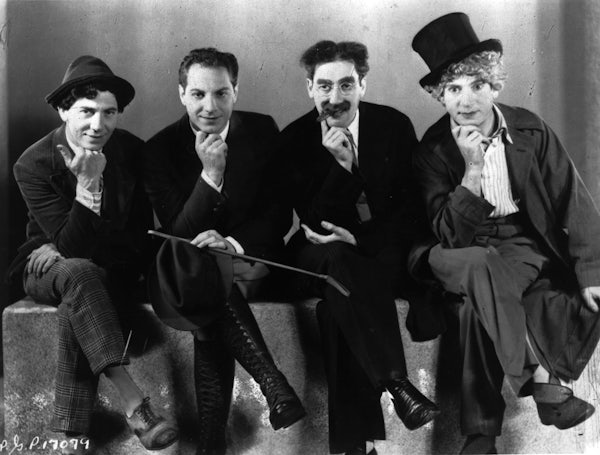
Stanley Louis Cavell was, like Grice was, a philosopher with style.
It’s no insult to tStanley Cavell that he was the rare philosopher who was read as much for his prose as for his ideas.
Although Cavell had all the right academic credentials -- he taught at Harvard for many years and was a distinguished advocate for the “ordinary language philosophy” of J.L. Austin and H. P. Grice -- his essays were written with an eccentric, sometimes maddening, elan.
Cavell’s sentences were alive with allusions in hectic smart-alecky self-mocking prose that seem closer in spirit to a Marx Brothers movie than a philosophic tome.
Cavell, as it happens, loved the Marx Brothers, as he generally did Golden Age Hollywood, particular in its screwball mode.
In one of his most accessible books, Pursuit of Happiness, Cavell analyzed the ditzy rom-coms of the 1930s and 1940s as “comedies of remarriage” that showed that love isn’t just a one time starburst moment but a matter of learning to live with other people over time.
Writing in the London Review of Books, Cavell made the case for the philosophical resonance of the Marx Brothers:
Intention, or the desperate demand for interpretation, is gaudily acknowledged in such turns as Chico’s selling Groucho a tip on a horse by selling him a code book, then a master code book to explain the code book, then a guide required by the master code, then a sub-guide supplementary to the guide – a scrupulous union, or onion, of semantic and monetary exchanges and deferrals to warm the coldest contemporary theorist of signs; or as acted out in Chico’s chain of guesses when Harpo, with mounting urgency, charades his message that a woman is going to frame Groucho (both turns in A Day at the Races)
The strange echo-y effect of “union, or onion” is a characteristic Cavell touch.
Cavell once defended Witters's stylistic eccentricity in terms that easily be used for Cavell himself.
“So some of Wittgenstein’s readers are made impatient, as though the fluctuating humility and arrogance of his prose were a matter of style, and style were a matter of pose, so these poses repudiate, not to say undermine, each other,” Cavell wrote in The Claim of Reason.
"To me this fluctuation reads as a continuous effort at balance, or longing for it, as to leave a tightrope; it seems an expression of that struggle of despair and hope that I can understand as a motivation to philosophical writing.”
Style, in other words, is the very grunting and groaning of the philosopher wrestling with his or her own thoughts and therefore inseparable from the philosophical act: style is the mind.
In a wonderfully lucid New Republic review of Cavell’s In Quest of the Ordinary, Richard Rorty paid tribute to Cavell’s as an oddball who had the courage of his eccentricty:
“Cavell is among professors of philosophy what Harold Bloom is among the professors of English: the least defended, the gutsiest, the most vulnerable. He sticks his neck out farther than any of the rest of us. Who touches this book touches a fleshly, ambitious, anxious, self-involved, self-doubting mortal.”
Cavell’s voice, now stilled, will live on his books, which will continue to be read not just by philosophers but anyone who hungers for a human voice. In time, he might be remembered not just as the heir to Witters and Grice and J.L. Austin, but part of the tradition of daring misfits, the line of Thoreau, Emerson, Emily Dickinson, Marianne Moore, and Wallace Stevens.
Subscribe to:
Posts (Atom)

 Posts
Posts

